When most people think of wallpaper, they picture it on a wall. After all, the clue is in the name. But lately, wallpaper is making waves in more unexpected places—on ceilings, inside cupboards, across doors, and even wrapped around tired old furniture. It’s not just for walls anymore, and that’s a good thing.
Wallpaper is now one of the easiest, most creative ways to make a space feel personal. Whether you're decorating a new home or giving an old room a facelift, don’t limit yourself to vertical surfaces. Let’s explore the many ways you can use wallpaper—and why sometimes, walls are just the beginning.

Beyond the Wall: Where Else Can You Use Wallpaper?
The beauty of wallpaper lies in its versatility. It’s strong, flexible, easy to clean, and available in thousands of designs. That’s why decorators are using it in places that used to be overlooked.
In design terms, the ceiling is often called the "fifth wall." But for many of us, it's just a flat white surface we forget to paint. Fortunately, that’s changing fast. Wallpapering a ceiling adds instant impact and brings depth to a space. In a small room, it can even make the area feel larger.
For example, a bold botanical pattern on the ceiling of a dining room turns a simple meal into an experience. A starry sky wallpaper in a child’s bedroom adds magic and imagination. Moreover, in modern homes with low lighting, a metallic or light-reflective wallpaper on the ceiling can help bounce light around.
Pro tip: Use a lighter paper to avoid drooping, and always size your ceiling first for better adhesion. Shop ceiling-ready wallpapers.
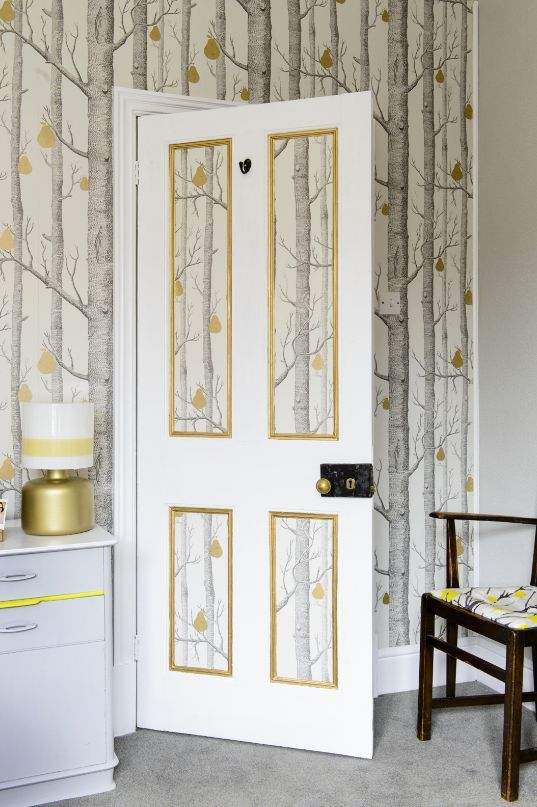
Adding wallpaper to interior door panels is a small change with a big effect. It gives character to otherwise plain doors and helps tie them into the room’s overall design. For instance, try a wood-effect wallpaper to mimic traditional panelling or use a modern print for a quirky touch in a hallway or study.
This technique is great for renters too—removable wallpaper is easy to apply and leaves no damage when it’s time to move on.

Check out this amazing company in Leeds called Monkey Puzzle
Upcycling furniture is one of the hottest trends in interior design. So, why throw out a perfectly good sideboard or set of drawers when you can give it a whole new look for less?
Wallpaper is ideal for furniture transformation:
This approach is not only budget-friendly and creative but also sustainable. Additionally, it’s ideal if you have mismatched furniture—wallpaper helps bring different pieces together in a cohesive way.
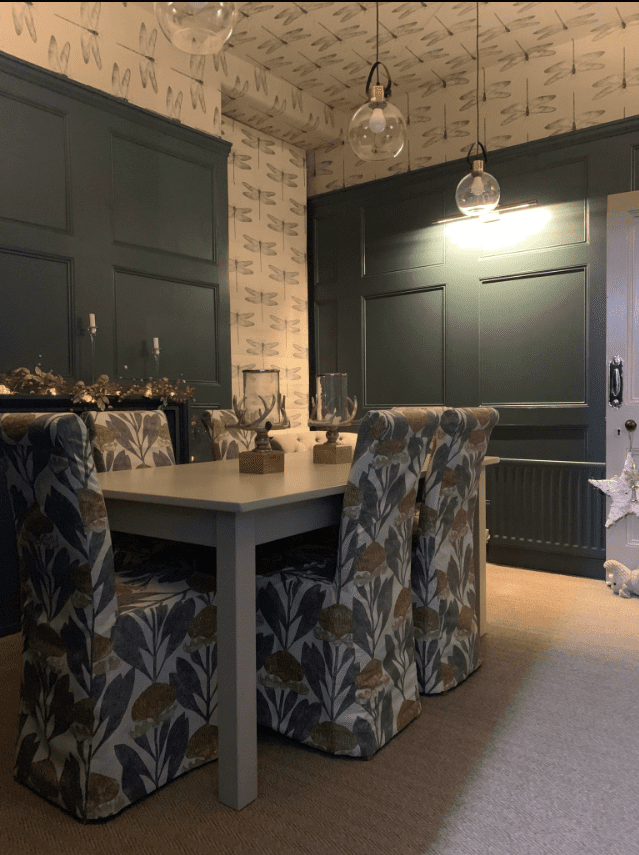
A dining room decorated by our sister company Hamill Decorating
Pattern placement changes how we see a room. Because wallpaper draws the eye, using it on a ceiling or furniture turns something basic into a feature. It can highlight a period detail, add drama, or soften a sharp corner.
For example:
Wallpaper lets you add interest without adding clutter—and it’s much easier than painting elaborate murals or buying new furniture. See bestselling statement patterns.
Tips for Using Wallpaper Off the Wall
If you’re tempted to give it a try, here are a few things to keep in mind:
Clean surfaces thoroughly and sand furniture if needed. For ceilings, remove any flaking paint or dust and use a strong wallpaper adhesive. Size the ceiling and leave it for 24 hours before you paste your paper.
Before you cover an entire surface, apply a small test patch. This helps you check how the paper behaves and whether your surface is smooth enough.
Wallpaper is more forgiving than paint—if you don’t like it, you can change it. So, don’t be afraid to go big with colour or pattern, especially on features like doors or sideboards.
――――――――――――――――――――
The idea that wallpaper is just for walls is quickly becoming outdated. As trends move towards more personal, eclectic interiors, wallpaper is proving to be one of the most flexible design tools available.
So, next time you’re considering wallpaper, think beyond the four walls. Look up to the ceiling. Then down at that tired chest of drawers. Finally, look across at a plain white door. These are blank canvases waiting to be transformed.
Wallpaper isn’t just for walls—it’s for anywhere you want to make a statement. Browse our full collection now.
――――――――――――――――――――
Our Wallpaper Visualiser Tool (coming soon!) lets you upload an image of your space and see what your chosen wallpaper will look like on walls, ceilings, or furniture.
Check out our Inspiration Gallery to see how real customers are using wallpaper in unexpected ways. You can also sign up for our newsletter to get fresh ideas, how-to tips, and exclusive offers straight to your inbox.
Subscribe to our newsletter
How to hang wallpaper like a pro
Join our community and receive an instant 20% discount on your first order!
Sign up for our newsletter to get early access to exclusive promotions, new collections, and design inspiration — straight to your inbox.
📩 Subscribe Now and Never Miss a Deal!